Solar Energy Transitions (SET): Inclusive e-cooking in sub-Saharan Africa

Project Overview
SET evidences how solar e-cooking co-created with Rwandan households can accelerate universal clean cooking and shape gender-responsive policy.
What problem was the project designed to solve?
Nearly 80 percent of households in sub-Saharan Africa still rely on polluting fuels such as wood, charcoal and dung. In Rwanda and across the region, transitions to clean cooking are rarely linear; instead, fuel stacking, where households rely on a mix of wood, charcoal, LPG and solar, is widespread. This directly challenges the ‘energy ladder’ model, which assumes households move in a linear manner from biomass to clean fuels. As women and girls carry the burden of cooking, this reliance on multiple fuels has too often been misrepresented as reluctance or poor decision-making, rather than recognised as the outcome of structural and design barriers. Working with women-headed, low-income and multi-generational households to co-create solar e-cooking systems, the SET project by advancing gender-responsive energy transitions to reframe policy and industry approaches, supporting Rwanda’s ambition for universal clean cooking by 2030 and advancing global progress towards SDG 7.
What did the project do and who was involved? How were you involved?
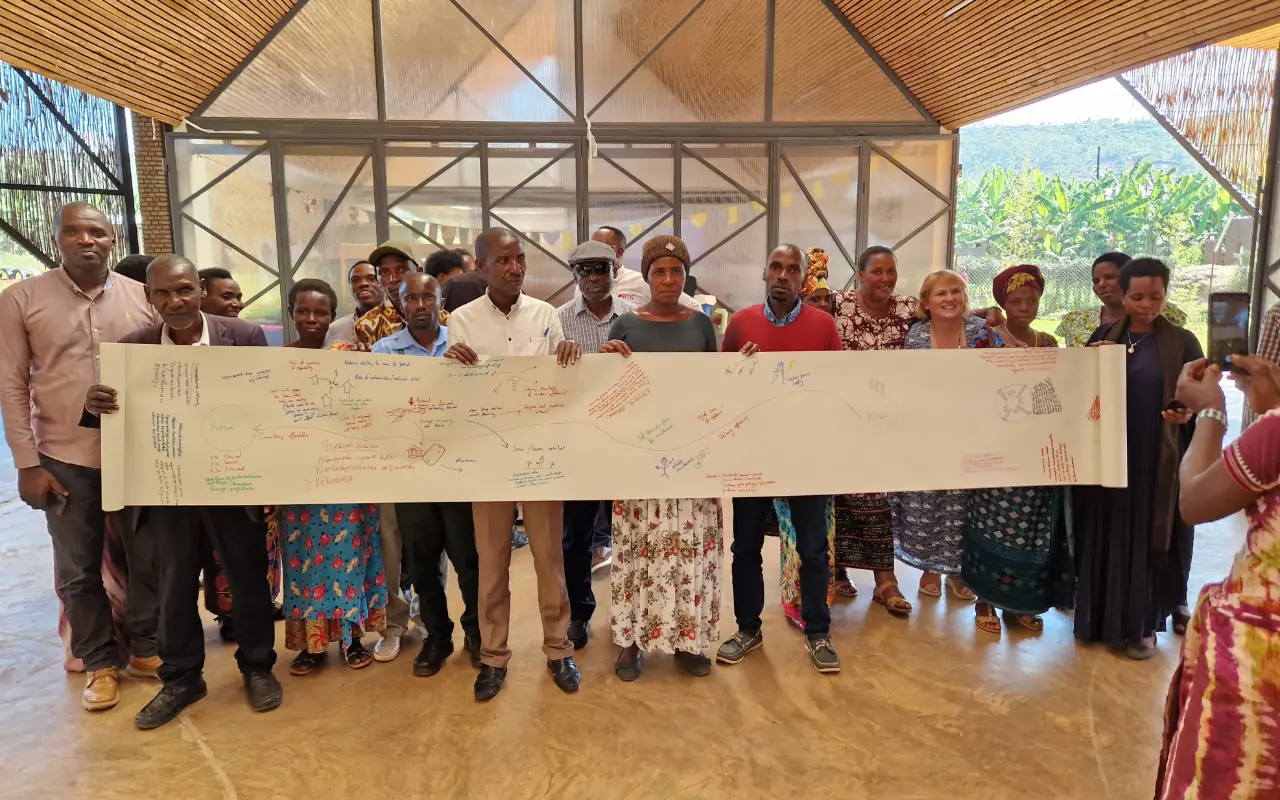
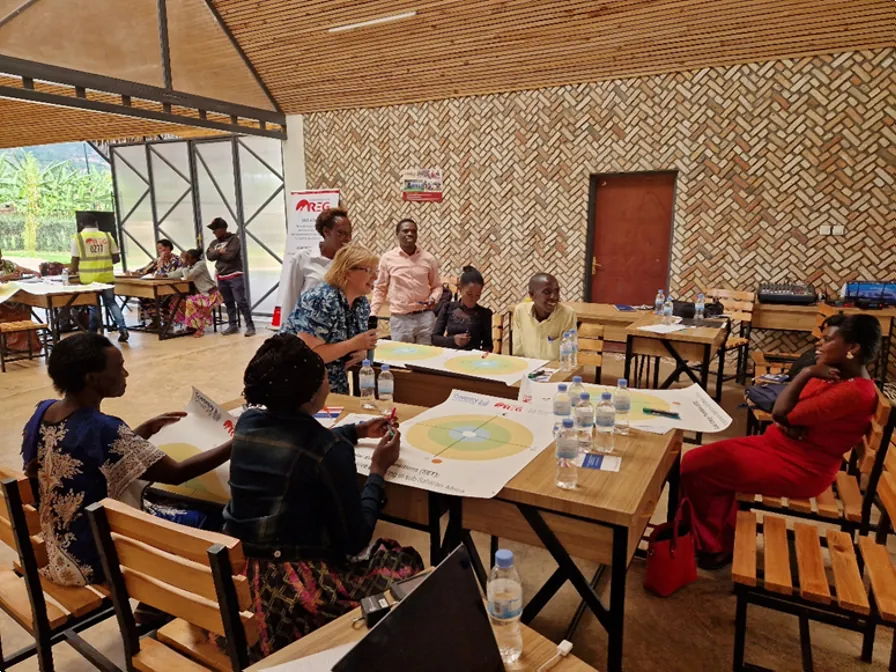
SET worked with households in Rwanda to co-create and test solar e-cooking systems that could better meet daily cooking needs and reduce reliance on polluting fuels. Methods included household energy mapping, participatory workshops, and digital storytelling to capture lived experience and fuel stacking practices. Recognising that clean cooking interventions often reproduce gender essentialism, the project deliberately involved all genders to explore how responsibilities can be shared through co-creation. Key partners included MeshPower, who provided technical expertise, and the Rwanda Energy Group, the national energy provider, linking the project with clean cooking policy and ambition. I was Co-Investigator, bringing expertise in working with underserved communities and in building energy literacy. I was also involved in delivering training for REG staff on co-creation methods, ensuring the sustainability of inclusive approaches in informing both national practice and policy.
Assistant Professor
Research Centre for Computational Science and Mathematical Modelling
Coventry University
What was the outcome?
The SET project delivered three key impacts. First, while women remained the main users of the solar e-cooker, there was new involvement of men and children, showing how cooking responsibilities can begin to be shared when clean technologies are embedded differently. Second, it addressed a critical gap in the literature by evidencing that fuel stacking is not a choice but a structural outcome of technologies that fail to support daily practices. By strengthening energy literacy with households, the project uncovered design failings and highlighted how systems could be adapted more culturally responsive. Third, the project validated a co-creation model using participatory methods such as mapping, storytelling and gamification. These approaches proved valuable in breaking down knowledge hierarchies by positioning underserved groups as active decision-makers in energy transitions, resulting in stronger community ownership laying foundations for future scaling and innovation.
What challenges did you address and how were they addressed?
The project encountered challenges that reflect the realities of piloting new technologies in energy-poor settings. Sizing the solar e-cooker systems proved difficult, as households without prior access to electricity could not easily anticipate how they would use appliances. At times households expressed what they thought the team wanted to hear, while later some expectations exceeded what the project was resourced to deliver. Solar systems also require greater day-to-day management than grid connections, so when one household gained access to the grid, the e-cooker was sidelined, illustrating that unless solar solutions are incorporated into grid expansion strategies, their role in clean cooking remains tenuous. Affordability was another barrier: even with flexible payment models and evidence for subsidies, many low-income households still found the technology financially out of reach, underscoring limits that design alone cannot solve.