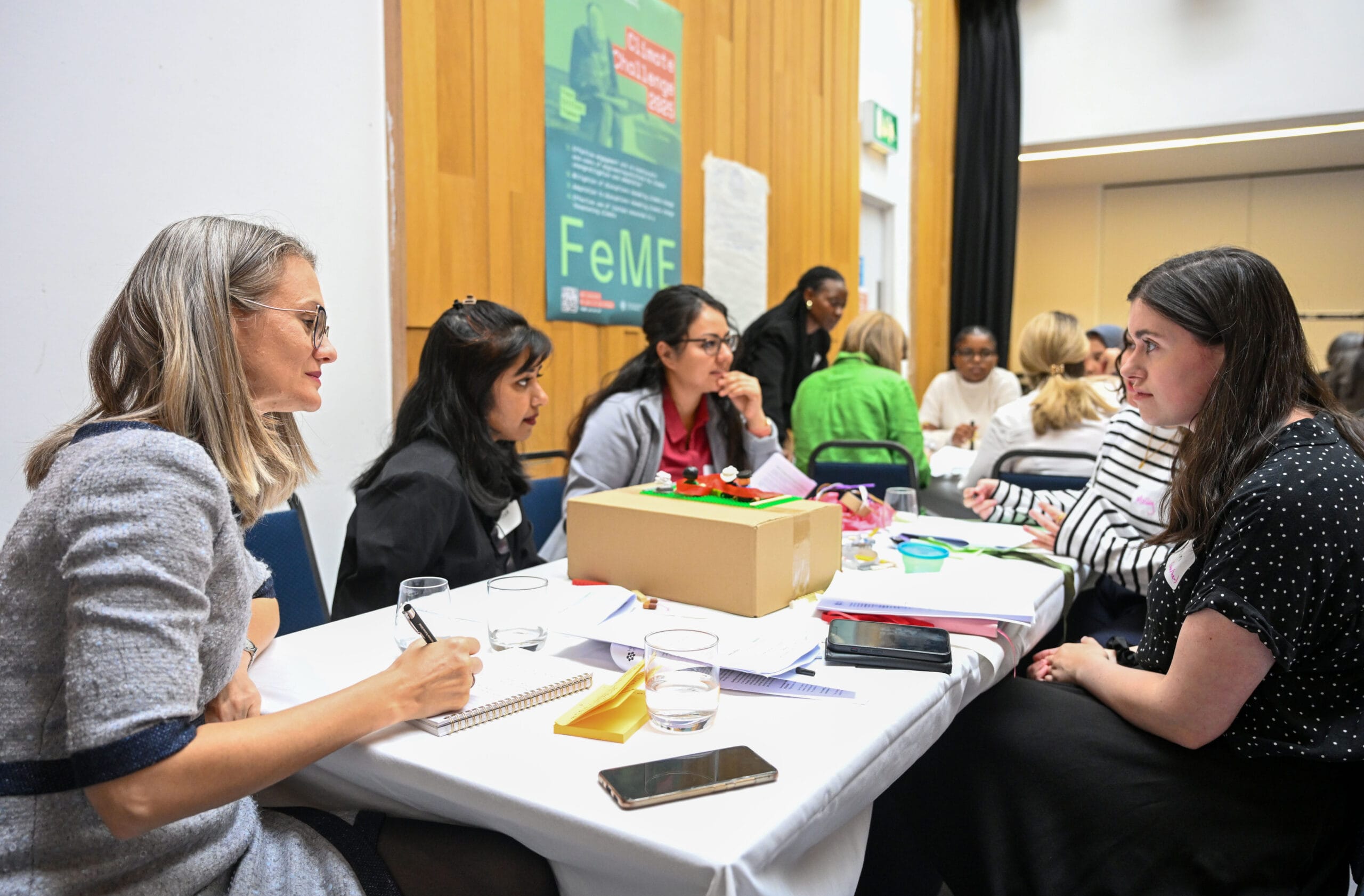
Nineteen projects across nineteen contexts, all asking the same question in different ways: what does it take to make engineering more inclusive, more grounded in lived experience, and more responsive to the climate and biodiversity challenges we face?
In early 2026, the Failure Modes of Engineering (FeME) Network Plus awarded seed funding to 19 projects across three streams — Challenge Discovery, Data for Change, and Represent and Innovate. Together, the group spans four continents and reaches communities from the Lake District to Lin-Lin Island, from Machakos to Milpa Alta, from Fair Isle to Fancy.
The seed funds were designed to test what FeME stands for in practice: that engineering responses to climate change and biodiversity loss are stronger when shaped by the people most affected, that lived experience is technical expertise, and that small, well-supported projects can model how funding itself can be done differently.
Challenge Discovery
The Challenge Discovery seed fund supports teams to make a first visit to a partner community or site, listen carefully, and shape a research agenda from what they find rather than what they assumed.
Five projects were funded:
- Dr Rosephine Georgina Rakotonirainy (University of Cape Town) is leading work on humanitarian planning and climate resilience, with discovery visits to communities in Madagascar or Chimanimani, Zimbabwe.
- Dylan Kassin (University of Oxford) is exploring how distributed solar systems and informal grids should shape post-conflict electricity reconstruction in Syria.
- Professor Helen Bridle (Heriot-Watt University) is working with partners in the Lake District National Park to scope soil health and microbial research in upland grazing systems.
- Reksa Kridawasesa (U-Inspire Indonesia) is reframing Jakarta’s urban flood risk through community-led socioeconomic resilience pathways with youth and women in flood-prone districts.
- Dr Zama Mahlobo (Stellenbosch University) is using science diplomacy and Ubuntu Dialogues methodologies to bridge academic and indigenous knowledge across KwaZulu-Natal and Limpopo.
Data for Change
The Data for Change seed fund supports training projects that put climate data tools into the hands of communities rather than treating them as data sources. All eight funded projects centre underrepresented or low-resource communities, and most use offline-first, low-tech approaches designed for places where connectivity is patchy and resources are scarce.
- Monica Katanu Nyamu (Wilkat Ltd, Kenya) is training 25 women and youth in Machakos slums in organic waste valorisation — composting, small-scale biogas, and community waste mapping.
- Vanessa Ngwi Fongwa (independent, UK/Cameroon) is leading “The Visual Resilience Archive,” teaching rural youth in Bamenda to document infrastructure failure using smartphones and simple engineering observation.
- Dr Mukiibi Ivan (Dynamic Doctors Uganda) is establishing a Community Climate Health Watch across rural Ugandan villages, training 100 health workers and youth leaders in offline climate-health monitoring.
- Sarah Owuor (independent, Kenya) is training 30 women smallholder farmers in Machakos to record and interpret rainfall and crop data using KoboToolbox and other offline mobile tools.
- Oscaryvan Canto Franco (Universidad Autónoma de Yucatán, Mexico) is co-developing community-led renewable energy monitoring with an Indigenous community in Yucatán, including hurricane preparedness training.
- Henry Njoku (EcoBridge Charity Foundation, Nigeria) is building data storytelling skills among youth, women, and Indigenous community leaders for climate advocacy.
- Daniel (Gadjah Mada University, Indonesia) is working with 50 villages in Southwest Sumba — one of Indonesia’s most drought-affected districts — to strengthen community water data and storytelling.
- Dr Ronda Zelezny-Green (datocracy AI, Spain) is delivering blended training to women engineers in Zambia, in partnership with LauncHER Engineers’ Hub.
Represent and Innovate
The Represent and Innovate seed fund supports early-career and lived-experience leaders developing inclusive engineering responses to climate challenges. The six funded projects span Latin America, the Caribbean, Africa, and the UK islands.
- Ricardo Leon (Universidad Católica de la Santísima Concepción, Chile) is co-designing a 24-hour clean energy supply assessment with the Indigenous community of Lin-Lin Island in Chiloé.
- Luz Dehni Acosta Moyado and Eduardo Walerstein Frenkel (La Uni, Mexico) are running a community lab with the Mujeres de la Tierra collective in Milpa Alta, co-designing circular solar technology for a community school.
- Hellena Nuwagaba (independent, Uganda) leads an all-women team co-designing a smart solar cooking and lighting system with women smallholder farmers in Kakumiro District.
- Dr Paolo Cherubini (Heriot-Watt University) is working with the Fair Isle community on fair energy flexibility — how a new household renewable-availability signal can be shaped by residents rather than imposed on them.
- Clyornique Durrant (independent, St Vincent and the Grenadines) is co-designing a solar climate garden with the Fancy community, integrating Indigenous knowledge and creating a living classroom at Fancy Primary School.
- Mhairi Sime (Heriot-Watt University) is exploring local energy market structures to address fuel poverty in Bressay and Sandwick, Shetland — drawing on her own lived experience of island energy poverty.
What’s next
Over the coming weeks we’ll share more about the cohort: how FeME funds, the women leading work across the network, and a view of climate-engineering challenges across the regions where these projects are based. Updates will appear in News & Insights and on our LinkedIn.
The cohort begins reporting and showcasing through 2026, with Challenge Discovery teams convening at an online showcase in August, Data for Change teams sharing training outputs in October, and Represent and Innovate teams reporting through the autumn.
This is what FeME means by inclusive engineering: not a slogan, but 19 specific, careful, locally-rooted projects asking what climate-resilient engineering can look like when those most affected lead the work.