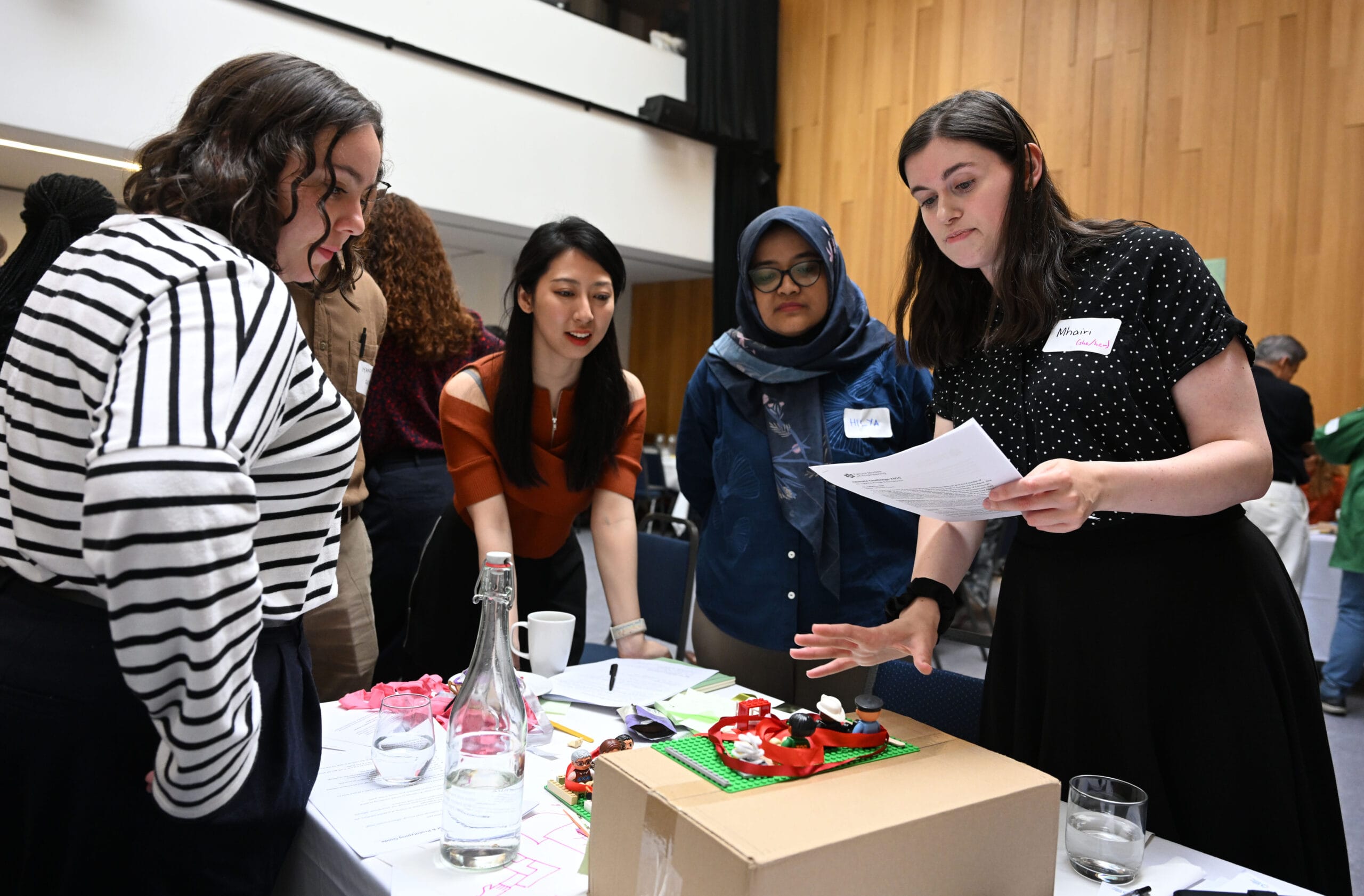
FeME was delighted to join other networks earlier in March at the Tomorrow’s Engineering Research Challenge (TERC) network meeting, hosted at the Royal Academy of Engineering.
Each network was invited to share progress, team composition, challenges, and plans for the year ahead. In preparing for this, we reflected on what we are most proud of, what we are building — and what has been difficult.
We could have focused on the practical challenges: operationalising a large, complex, multi-million-pound programme, working across disciplines and institutions, and building a global network.
But at the heart of our work is something deeper.
Our mission is to shift power — ensuring that those most impacted by the climate crisis, and most underrepresented in engineering, have greater agency, visibility, and influence in shaping solutions. To do that, we must also talk about the systems shaping both the problems and our institutions.
We chose to name the currents we are working against. The systems driving climate change and biodiversity loss — capitalism, colonialism, racism and misogyny — are often present in these rooms and networks but rarely addressed.
Because these systems are not external to the institutions we work within, but they are embedded within them. Academia, research systems and engineering cultures are shaped by these same dynamics, creating a tension between the transformative change we seek and the structures we operate inside.
As a network, we have found that efforts to centre equity, care and justice often sit uneasily within cultures that reward competition, individual achievement and short-term outputs. Collaboration, relational work and trust-based approaches are frequently undervalued — despite being essential to addressing complex challenges like climate change.
Rather than ignoring this tension, FeME is choosing to hold it openly.
We are cultivating different norms — valuing community, shared leadership and quieter contributions — while recognising that participants are still navigating and trying to succeed within existing systems.
Alongside a focus on outputs, partnerships and research agendas, we are learning the importance of making space to reflect on the conditions that shape participation — who feels able to speak, who is heard, and whose ideas shape the work. These factors matter deeply.
In our presentation, we shared a reflection from a FeME participant who described one of our events as the first time they had been in an engineering space where they truly felt they belonged — without impostor syndrome or anxiety about speaking. When people feel safe and valued, creativity flows and new ideas emerge.
This is not a “soft” issue, but a structural one.
If engineering is to respond meaningfully to global challenges such as climate change and biodiversity loss, we need spaces where different experiences, perspectives and ways of thinking can genuinely shape the conversation.
That requires more than inviting diverse voices into existing systems, it requires rethinking the norms of those systems themselves.
Networks like FeME have an important role to play — making these dynamics visible and experimenting with new ways of working.
By speaking more openly about the tensions within our institutions, we begin to create research environments that better reflect the complexity of the challenges we are trying to solve.
These conversations are not distractions from engineering, they are part of the work of transforming it.