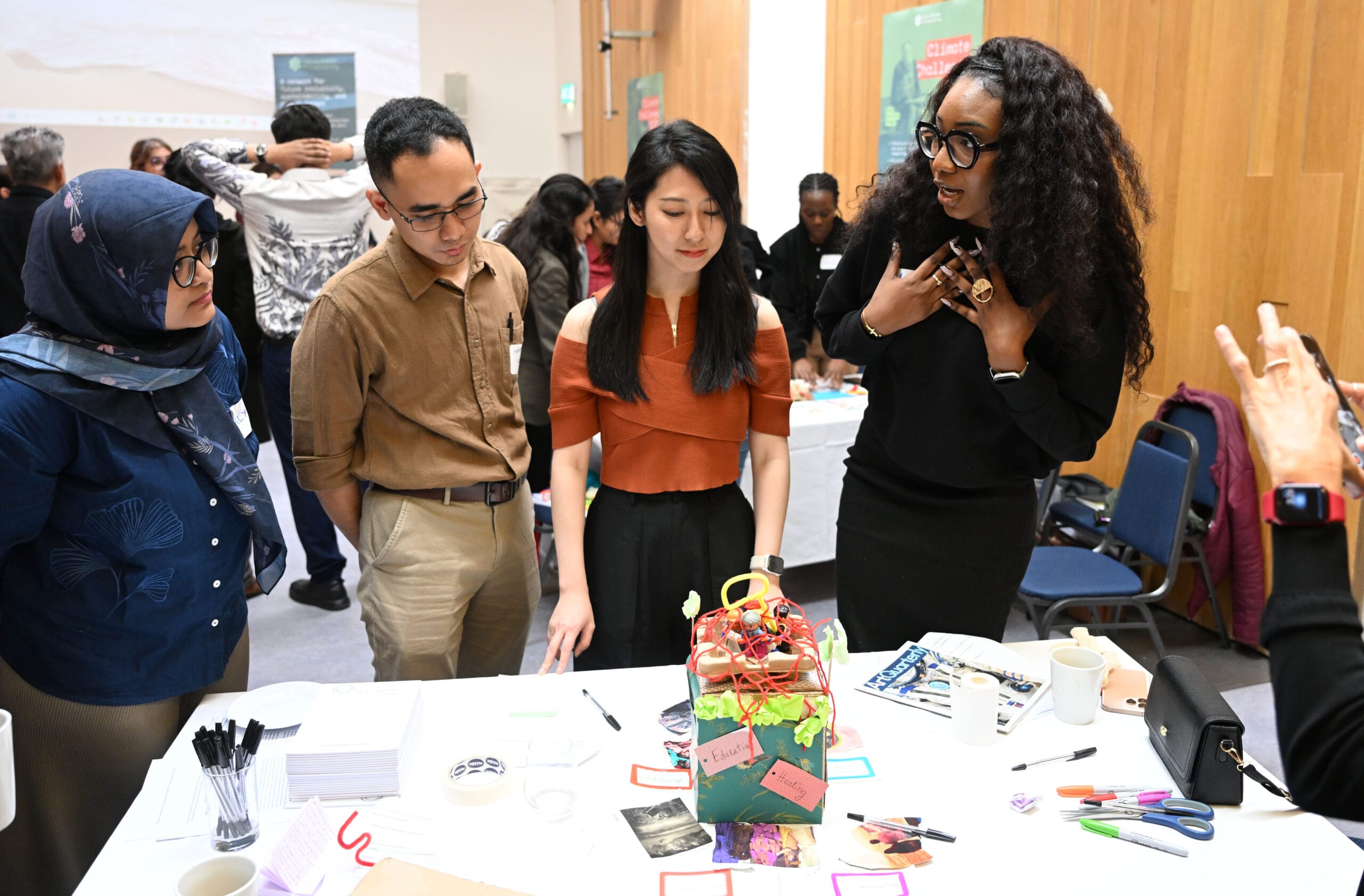
FeME’s Independent Advisory Board brings together global leaders in engineering, systems thinking, and inclusive innovation to help guide the network’s growth and impact. The Board’s role is to advise, challenge, and amplify FeME’s mission to ensure our values of care, transdisciplinarity, and inclusivity remain at the heart of all it does. Meet our Advisory Board here.
FeME Advisory Board Chair is Maty Tall, Manager from Deloitte Afrique Francophone’s Energy and Climate Practice and co-founder of Empowering Local Energy. With roots in Dakar and a career spanning Africa, Europe, and the US, Maty embodies the bridge between technical excellence and human-centered design. Her leadership is defined by empathy, collaboration, and a conviction that engineering must serve communities, not just systems.
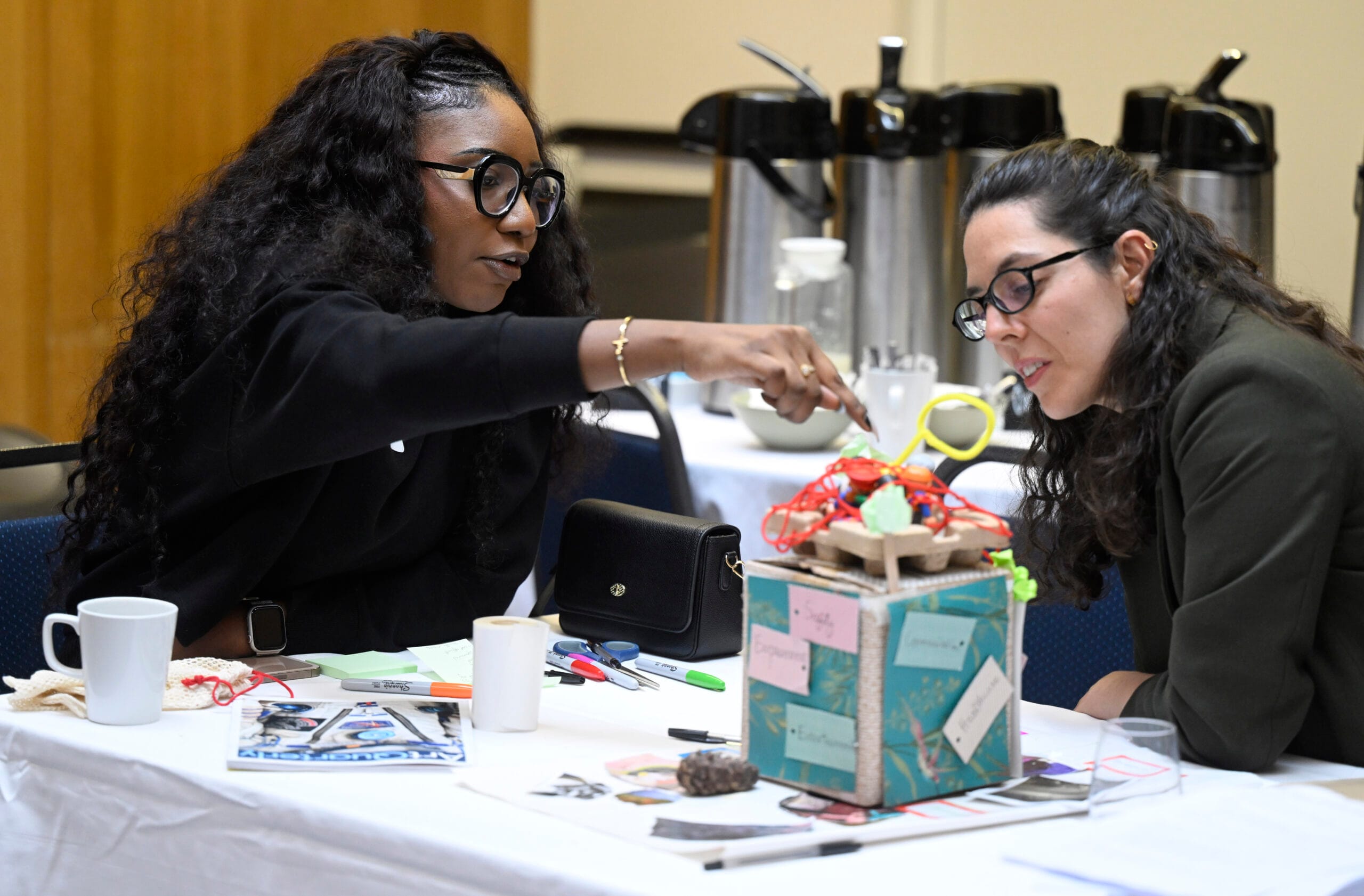
In this conversation, Maty reflects on her journey into engineering, what inclusive leadership means to her, and how FeME is reimagining the future of the profession.
Can you tell us about your journey into engineering?
My journey into engineering is a story of representation and quiet revolution. I grew up in Dakar surrounded by women that were engineers despite everything. My mother, daughter of a talented basket weaver and among the earliest generations of computer engineers in West Africa, working at the West African Meteorological Satellite Center in Niamey in the 1990s, and later at Senegal’s Ministry of Telecommunications shaping national policy on cybersecurity and the digital economy. My older sister followed in her footsteps, building a global career in electrical engineering across the automotive and aviation sectors.
So, I was raised in a world where women in engineering weren’t anomalies, they were the norm. It’s not that the glass ceiling didn’t exist; I just couldn’t see it yet. That visibility didn’t dictate my path, but it normalized the idea that engineering was within reach if I chose it.
What truly drew me in was curiosity, a desire to understand how things work, and how they could work better. I still remember my first physics lessons in middle school, being utterly fascinated by the idea of energy transfer and realizing I wanted to help make electricity not just understood, but accessible, especially to communities that needed it most.
That conviction led me to a BEng in Electrical Engineering specializing in Power Systems, and later an MSc in Sustainable Energy Systems at the University of Edinburgh. My career since has taken me across continents and perspectives: from hybrid solar-diesel modeling at Cummins, to biogas-solar research in Germany, energy market modeling at Aurora Energy Research, and clean energy consulting at Nathan Associates. I also co-founded Empowering Local Energy, a women-led startup supported by Edinburgh Innovations, focused on decentralized clean-energy models.
Today, as a Manager in Deloitte Afrique Francophone’s Energy and Climate Practice, I help countries design and implement their energy transitions, balancing technical ambition with socio-economic inclusion. Up to now, one of my favorite projects has been producing inclusion-responsive policy reviews and contributing to regional planning for cross-border transmission in West Africa for the Millennium Challenge Corporation and the West African Power Pool, as well as designing and delivering training on how to integrate gender into rural electrification programming through USAID’s West Africa Energy Program. I feel incredibly fortunate that these two passions of mine, engineering and inclusion, have now merged to become my everyday work. My leadership has been shaped by that constant tension between innovation and empathy, ensuring that as we engineer systems, we never lose sight of the people they are meant to serve.
When did you begin to see yourself as a leader, and how has your leadership evolved over time?
It’s hard to pinpoint when I first saw myself as a leader, but looking back, the signs were always there and encouraged by my first teachers, especially Mr. Ndegeue Ngom and Sir Ndiaye. In middle school in Dakar, I organized student associations to support children from my old primary school, raised funds for cultural events celebrating Senegal’s heritage, and rallied classmates around causes bigger than ourselves.
That instinct to mobilize people for collective good grew stronger when I was selected at 15 for the U.S. Department of State’s Youth Exchange and Study Program. Representing Senegal while serving another community for a year transformed my worldview and my sense of duty. As a YES alumna, I poured myself into community projects on education access, gender equity, and mentoring. It was my first realization that leadership isn’t a title; it’s a practice, the habit of showing up for others again and again.
At Arizona State University, I became Academic Excellence Chair of the National Society of Black Engineers. Supporting underrepresented students taught me that leadership must be both strategic and compassionate, building systems of belonging, not just offering help. Later, I served as Editor-in-Chief of HerCampus, a platform empowering young women to express themselves freely and lead with authenticity.
During my MSc at the University of Edinburgh, as a Mastercard Foundation Scholar, I served as class representative and joined the Engineering Curriculum Committee, learning to translate student needs into institutional change. I also helped launch the Molly Fergusson Initiative to support women and gender minorities in STEM, realizing that representing others wasn’t enough; we had to build structures that outlive representation.
Then came the COVID-19 pandemic, a turning point that exposed the fragility of our systems and the urgency of resilience. I co-founded Empowering Local Energy to help communities co-design decentralized, inclusive energy solutions. That experience reshaped my leadership style, making me more collaborative, agile, and community-driven.
Today, through mentoring with Shine to Lead, supporting Mastercard Foundation recruitment processes, and chairing FeME’s Independent Advisory Board, I continue to champion inclusive leadership. Across every chapter, one truth endures: my leadership has always been about expanding access, to knowledge, opportunity, and power, and transforming representation into lasting impact.
What experiences have shaped your commitment to inclusive and climate-conscious engineering?
My commitment to inclusive, climate-conscious engineering began with representation, and, at times, its absence. When I left home for engineering school, far from my family’s unique example, I realized how rare it was to see women, especially African women, in those spaces. The glass ceiling became visible, and I often imagined how my mother must have navigated it decades earlier as a first-generation student with an artisan father and a peanut-seller mother.
That realization was a turning point. It made me conscious of my privilege, to stand on other women’s shoulders not just to rise higher, but to see farther. I decided to become that shoulder for others, and to help build systems that make such support unnecessary in the future, systems where diverse engineers thrive regardless of gender, background, or ability.
At the same time, I began to see exclusion in the very solutions we engineered, technically sound but socially detached. Challenges like energy poverty or climate vulnerability are profoundly gendered, yet often addressed with one-size-fits-all technologies. I realized that when design ignores human context, even the best technology can fail.
That insight now shapes everything I do, from integrating gender and social inclusion into rural electrification programs, to designing equitable climate-finance policies. It taught me that engineering isn’t just about systems and structures, it’s about people. When inclusion and sustainability guide our designs, we don’t just build better infrastructure, we build fairer futures.
What excites you most about chairing FeME’s Advisory Board?
What excites me most about chairing FeME’s Advisory Board is the chance to work with an extraordinary collective, people who believe, like I do, that engineering must evolve to serve communities, not just systems. Together, we aim to build a truly global network bridging academia and industry, advancing inclusive, community-oriented approaches to engineering and climate solutions while amplifying diverse voices and stories.
This Board brings together decades of expertise in engineering, systems thinking, and design, individuals with remarkable careers and a shared passion for FeME’s mission. Our very first meeting could have gone on all day; the energy and depth of insight in that room were remarkable.
FeME itself already has exceptional executive leadership, the first 100% women-led team to earn this kind of global recognition. As a Board, our role isn’t to reinvent that excellence, but to support and amplify it, to advise, guide, challenge lovingly when needed, and ensure FeME’s message reaches the rooms where it can inspire change.
As Chair, I feel a mix of humility and excitement. It’s humbling to lead such a distinguished group for such a meaningful cause, but deeply energizing too. FeME represents what the future of engineering should be, inclusive, reflective, and purpose-driven. I’m honored to help build that future, one idea, one partnership, one conversation at a time.
FeME draws on the concept of “failure modes.” What does that idea mean to you?
In engineering, a “failure mode” is a way a system or process can fail, identifying it helps us prevent future breakdowns. When we apply that concept to engineering as a profession, it becomes a moral compass.
Engineering exists to improve the human condition, to make life safer, fairer, and more dignified. So, a “failure mode” in our field describes how we sometimes fall short of that purpose. I’ve seen it firsthand: in clean-cooking projects where women’s voices were ignored, in climate-finance models that overlooked community resilience, in brilliant designs that failed because they didn’t fit the lived realities of users. These experiences reminded me that technical excellence alone isn’t enough, impact must be inclusive, contextual, and human-centered.
That’s why FeME’s framework excites me so much. It examines six “failure modes,” Diverse, Inspired, Connected, Inclusive, Interdisciplinary, and Agile Engineering, not to assign blame, but to learn and evolve. It helps us ask better questions: Who’s missing? What assumptions are we making? How can we bridge technical and social understanding?
For me, FeME isn’t just critiquing engineering, it’s re-engineering how we think about progress itself.
What advice would you give to the next generation of engineers and leaders?
Be bold. Be curious. And design with empathy.
Step outside familiar paths, that’s where discovery begins. When I design, I approach each problem almost like an outsider. I use my technical knowledge, yes, but I draw 80% of my design choices from users, their realities, frustrations, and sometimes even their superstitions. That’s where real innovation hides.
Be flexible. Many engineers have an exaggerated sense of precision, we love order and end goals. But justice lives in the grey. It requires nuance, empathy, and constant reflection. Care, on the other hand, requires pause, the humility to slow down, observe, and adjust before rushing to “solve.”
Seek mentors, people who both ground and challenge you. And build yourself a moral checklist:
- Who is affected by this problem?
- How does it impact them?
- What human need is at stake?
- How has this need been ignored before?
- Am I designing with openness, or with ego?
Keep asking these questions, and you’ll design not just systems, but societies that care.
Finally, how do you reimagine the future of engineering?
If I were to reimagine the future of engineering, it would look profoundly human. In this future, engineering wouldn’t happen to communities, but with them. Systems would be not only technically sound, but socially conscious and emotionally intelligent. Inclusion wouldn’t be an afterthought, it would be the design principle itself.
Resilience would mean not only the strength of our bridges or grids, but the strength of the people around them. Adaptability would mean designing for change, because climate, context, and communities evolve faster than any blueprint.
I imagine a world where a young girl from Tambacounda can sit beside a researcher from Tokyo as equal problem-solvers. Both bring value, one offers data, the other lived experience. Neither is “beneficiary” or “expert”; both are partners in innovation.
That’s the world FeME is building. By identifying where engineering fails, FeME helps us rebuild it, more equitable, more connected, and more compassionate. From my own experience across the US, Europe and Africa, I’ve seen how inclusion and empathy multiply impact, and how their absence limits it.
FeME gives us a language for this transformation. It reminds us that progress isn’t only about efficiency, it’s about equity, imagination, and care. That’s the world I want to help engineer, one where data and empathy walk hand in hand, and where every design begins and ends with humanity.
—
Maty Tall’s journey reminds us that leadership in engineering is no longer defined by hierarchy or expertise alone but by empathy, courage, and the willingness to listen. Her story is a testament to how representation becomes transformation when paired with purpose.
We are working to shape a future where engineering is not only for communities, but with them where inclusion and imagination are as essential as innovation. Through Maty’s leadership and the collective wisdom of FeME’s Advisory Board, we are rethinking what success looks like: not simply systems that work, but systems that care.